Need sewer line repair services in Stamford?
Questions about a leak, a backed-up drain or a sewer line? Send a message or request an estimate, and a local provider can follow up with no obligation.
No obligation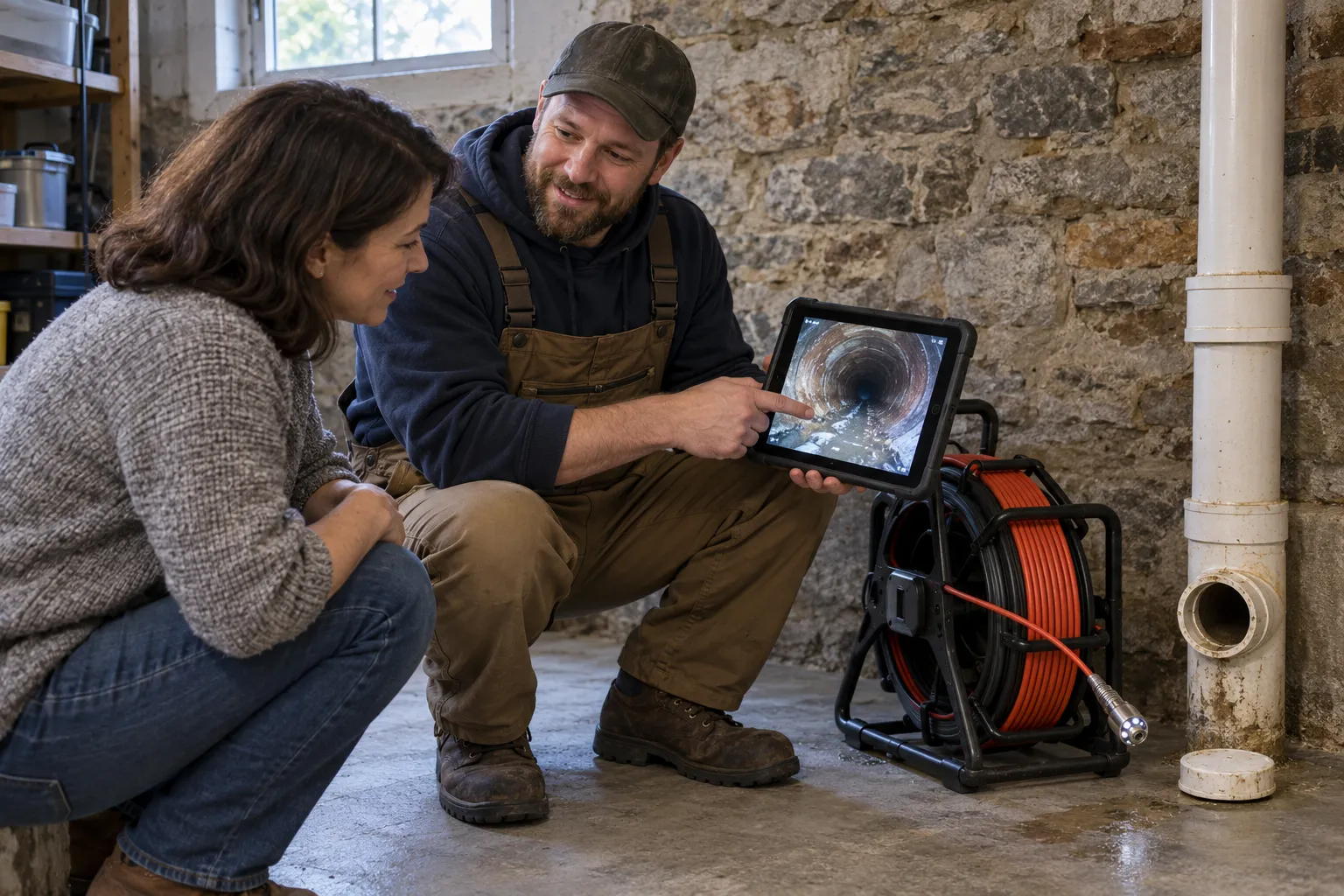
Your sewer line is the one big pipe that carries every drain in the house out to the street or septic system. Think of it like the trunk of a tree. When the trunk is blocked or cracked, every branch inside the house feels it. That is why one slow drain can turn into a backup in the basement.
Scottconservative Plumbing is a referral service. We do not repair pipes. We connect homeowners in the Stamford area with independent local providers who handle sewer line repair, camera inspections and blocked pipe services. You explain the problem, a provider talks through options, and you compare estimates with no obligation. Fewer tabs, faster answers.
A sewer backup is the most urgent sign on this page. Think of a clogged kitchen sink, only much bigger. The water has nowhere to go, so it looks for the easiest way out, usually a floor drain, tub or toilet down low in the house.
Request a callback to check provider availability and describe what you see. Many providers can respond quickly to an active backup.
Stop running water. That means no flushing, no laundry and no dishwasher. Every gallon you add has to go somewhere, and it may come up through a floor drain.
Sewage can carry germs. Keep children and pets out of the area, avoid touching it, and open a window if the smell is strong. Leave cleanup of anything large to professionals.
A sewer line rarely fails without warning. It is more like a car that starts making an odd noise weeks before it stops. Catching the early noise is the whole game. Small problem, early.
One slow drain is often a simple blockage. Many drains acting up together point to the main line.
Look for soggy patches, a sunken strip of lawn, or grass that is suddenly greener along one path. A leaking pipe feeds the soil like a slow watering can.
Pipes do not break for no reason. Most damage builds slowly, like a crack in a sidewalk that widens each season.
Tree roots follow moisture. They slip into tiny joints, then grow thick and catch paper and waste. Older homes may also have clay or cast iron pipe, which can crack, flake or sag after many decades.
Cold winters and spring snowmelt move the soil around buried pipe. Wet ground expands, then settles again. Over many cycles, a joint can slip or a section can bow, which leaves a low spot where waste collects.
Good repair starts with seeing the pipe, not guessing. It is like a doctor ordering an X-ray before talking about treatment.
A provider feeds a small waterproof camera into the line through a cleanout. You can often watch the screen, and many providers can save the video or photos so you can compare estimates later.
A locator tool traces the camera signal above ground. That tells the provider how deep the problem sits and whether it is under the lawn, a driveway or the foundation.
Request a callback to ask a provider about a camera inspection.
Not every damaged line needs to be dug up. The right choice depends on what the camera shows.
If only one section is cracked, a provider may dig a small trench and replace just that piece. Picture patching one bad stretch of road instead of repaving the whole street.
Trenchless lining pushes a resin sleeve inside the old pipe, where it hardens into a new inner wall. It can mean less digging, though it does not suit every pipe, especially one that has collapsed.
When a pipe is badly bent, broken in many places or collapsed, replacing the run may make sense. Trenchless pipe bursting or traditional trenching are both possible, depending on access.
Many towns require a permit for sewer work, and an inspection may follow. Providers often know the local steps, but ask who handles the paperwork.
Property lines matter too. In many places the homeowner owns the pipe up to the street connection, while the town owns the main. Your town office or a provider can help you sort out which part is yours.
Some policies may cover sudden damage, but many exclude wear and tear or roots. Check your policy. Providers can often help document damage for a claim, so keep camera footage and written notes.
A big repair deserves a calm look. Explain, then decide. You are never obligated to accept the first estimate.
When you are ready, request an estimate and compare the approaches side by side.
A slow drain with no backup, or a small yard dip, is less urgent. Still, schedule a camera look soon. Cold-season ground movement can turn a minor flaw into a larger one.
A small camera shows the inside of the line so the problem is seen, not guessed.
Providers can replace one cracked section instead of digging up the entire sewer run.
A resin sleeve can seal an old pipe from inside, often with less yard digging.
Collapsed or badly broken lines may need a new pipe run from house to connection.
Sewer work varies a lot with depth, pipe material, access and local rules. These are typical U.S. ranges only. Always ask for a written quote that lists exactly what is included before you agree.
| Item | Typical range | Notes |
|---|---|---|
| Camera inspection | $150 – $500 | Cost varies with access and length of line |
| Main line clearing | $200 – $700 | Often a first step before any repair |
| Spot repair | $1,500 – $4,000 | Depends on depth and digging needed |
| Trenchless lining | $3,000 – $10,000 | Pipe must be in suitable shape |
| Full line replacement | $4,000 – $25,000 | Length, depth and surface restoration matter |
| Permit and inspection | $50 – $500 | Rules differ by town |
Tell us what you see, such as backups, smells or soggy spots, so the right provider is a match.
Request a callback to check availability with an independent local provider.
Ask about camera results, repair choices and a written estimate.
Compare estimates, ask questions, and choose with no pressure or obligation.
One conversation can connect you with an independent provider, so you spend less time browsing.
Sewer jargon is confusing. You get simple descriptions of the problem, the repair choices and what each involves.
Request an estimate and review options side by side. There is no obligation to accept any of them.
Scottconservative Plumbing makes the connection. Independent local providers do the inspections and repairs.
Questions about a leak, a backed-up drain or a sewer line? Send a message or request an estimate, and a local provider can follow up with no obligation.
No obligationLook for several slow drains at once, gurgling toilets, sewage smells, or wet, sunken patches in the yard. These point toward the main line. A camera inspection from a local provider can confirm what is happening inside the pipe.
No. Some repairs use trenchless methods, like lining or pipe bursting, which need much less digging. Others need a trench. A camera inspection helps a provider explain which approach fits your pipe, depth and yard layout.
It depends on your policy. Some policies may cover sudden damage, but many exclude wear, age or roots. Check your policy, and ask a provider to help document the damage for a claim.
Questions about a leak, a backed-up drain or a sewer line? Send a message or request an estimate, and a local provider can follow up with no obligation.
No obligation