Need home emergency plumbing in Stamford?
Questions about a leak, a backed-up drain or a sewer line? Send a message or request an estimate, and a local provider can follow up with no obligation.
No obligation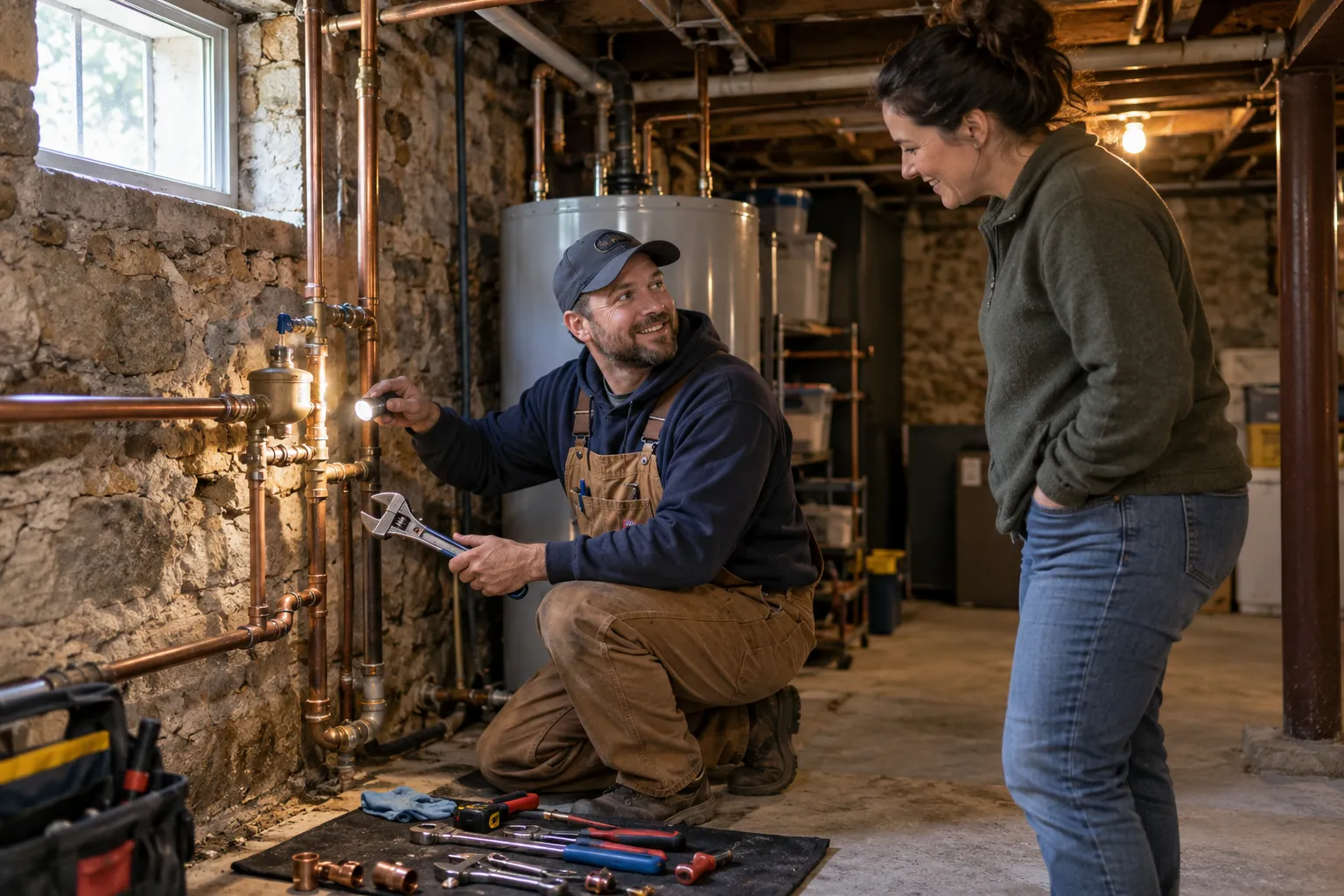
A plumbing emergency feels huge because water moves fast and floors, walls and ceilings soak it up. Think of a small leak like a crack in a dam. It starts quiet, then the pressure behind it does the rest. That is why a quick start matters, even before you know the full cause.
Scottconservative Plumbing is a referral service. We do not do the plumbing. We connect homeowners across the Stamford area with independent local providers who handle burst pipes, failed water heaters, backups and more. Availability varies by provider, so Request a callback to check who can respond. You can compare estimates and decide with no obligation.
Picture a bathtub with the drain open and the faucet still running. The water has to go somewhere. A plumbing emergency works the same way, only the water is leaving a pipe you cannot see. Your first goals are simple: slow the water, stay safe, and reach someone who can help.
Shut off the water, then make the connection. Fewer tabs, faster answers.
Not every drip needs a rush. A dripping faucet can usually wait for a normal visit. Some problems cannot wait because they damage your home or affect your safety.
If you are unsure, treat it as urgent until a provider tells you otherwise. Asking costs nothing, and an early question is cheaper than a ruined floor.
Water is like a spill on a paper towel. It spreads farther than the spot where it landed. Wood, drywall and insulation all pull moisture in and hold it. After a day or two, damp materials can start to grow mold, and the repair list gets longer.
That is the heart of small problem, early. A cracked fitting is often a modest repair. A cracked fitting that ran all weekend can become a flooring, drywall and drying job. Many providers can respond quickly, but availability varies, so ask when you connect.
Water expands when it freezes, like a soda can left in the freezer. In a pipe, that pushing force can split the metal or loosen a joint. The ice often hides the damage. The real leak shows up when it thaws.
Older homes with stone or block foundations often have pipes running along cold outside walls, in crawl spaces or in unheated corners of a full basement. Repeated freezing and thawing through winter and spring stresses those pipes again and again.
If you suspect a frozen pipe, keep the faucet slightly open, warm the room gently, and do not use an open flame. If a pipe has already burst, shut off the main valve and open a low faucet to drain the line.
A water heater is like a kettle that never gets turned off. It holds hot water under pressure, so problems deserve respect. A puddle at the base, rust-colored water, popping sounds or a hot water tank that stops working can all point to trouble.
If the tank is leaking, turn off the power or gas to the unit and close the cold water valve above it. Do not touch anything if water is near electrical parts. A provider can tell you whether a repair makes sense or whether the tank has simply worn out.
Think of a crowded hallway where people cannot get through. A clog or a blocked line makes water back up the same way. If several drains gurgle or overflow at once, the trouble may be deeper than one fixture. Stop using water in the house and tell the provider what you see. They can decide what needs a closer look.
A good visit follows a clear pattern, like a doctor visit. First comes a look at the symptoms. Then the provider finds the cause, explains the options, and gives you a price before starting work.
Expect them to shut off water to the damaged area, find the source, and show you what failed. They may also recommend a lasting fix instead of a patch. Ask them to explain it in plain words. A fair provider will not mind.
Buying a repair in a hurry is like shopping while hungry. Everything looks necessary. Slow down just enough to ask a few questions.
Explain, then decide. Requesting an estimate through Scottconservative Plumbing carries no obligation, and you can compare more than one approach.
Providers in our network are independent businesses, so their rules, pricing and schedules differ. Ask about licensing and insurance for your area, and ask for those details directly from the provider. Choose someone who answers clearly and does not rush you into extra work.
A few small steps can limit the damage, like putting a bucket under a roof leak.
Once the water stops, think of the next few days as drying out a wet sweater. It takes time, and rushing it leaves problems behind. Open windows, run fans or a dehumidifier, and watch for musty smells or stains.
Keep your invoice and photos. Some policies may cover sudden damage, so check your policy, and ask the provider to help document the damage for a claim. Then ask what could prevent a repeat, such as insulating exposed pipes or replacing an aging shutoff valve.
Providers can stop active leaks, shut off damaged sections, and make the system safe so the water stops spreading through your floors and walls.
Split or frozen pipes can be repaired or replaced, with clear options explained before work starts.
Leaking or failing tanks are checked, then repaired or replaced if needed.
Providers look into overflowing fixtures and sewage backups and explain what they find.
Prices depend on the problem, access to the pipe, materials and the provider. These are typical U.S. ranges only. Ask for a written quote before work begins, and compare more than one if time allows.
| Item | Typical range | Notes |
|---|---|---|
| Leak or fixture repair | $150 – $500 | Varies with part and access |
| Burst pipe repair | $350 – $1,500 | Longer runs cost more |
| Frozen pipe thawing | $200 – $800 | Repair may be extra if split |
| Water heater repair | $150 – $600 | Depends on the failed part |
| Water heater replacement | $1,200 – $3,500 | Tank size and type matter |
| Main shutoff valve replacement | $200 – $750 | Older valves can cost more |
Shut off the water, and the power near wet areas if you can reach it safely.
Request a callback or send the request form to ask about provider availability.
Ask what caused the problem, what the options are, and get the quote in writing.
Choose what fits, then dry the area well and keep your records.
Skip the long evening of tabs and phone tag. Start with one connection to a local provider.
You get problems explained in simple words, so you understand the choices before deciding.
Request estimates and compare approaches. There is no obligation to hire anyone.
Local businesses do the work. Scottconservative Plumbing only makes the connection.
Questions about a leak, a backed-up drain or a sewer line? Send a message or request an estimate, and a local provider can follow up with no obligation.
No obligationShut off the main water valve right away, then open a low faucet to drain the line. Turn off power to wet areas if it is safe, move belongings out of the way, take photos, and contact a provider.
Often, yes. A leaking tank can flood the floor, and electric or gas supply makes it riskier. Turn off the power or gas, close the cold water valve, and ask a provider to check it.
Some policies may cover sudden damage, but coverage varies and wear or neglect is often excluded. Check your policy. Providers can often help document the damage for a claim.
Questions about a leak, a backed-up drain or a sewer line? Send a message or request an estimate, and a local provider can follow up with no obligation.
No obligation